The 6 best nutrition label generators in 2026
Every serious option for generating an FDA Nutrition Facts label, compared on the things that actually matter: how the math gets done, what compliance features are included, what exports you get, and what it really costs. Full disclosure: Nutrillius is our product — so we've kept this factual, cited what each competitor does well, and told you exactly who should pick something else.
key takeaways
- Recipe-based generators (Nutrillius, ReciPal, Food Label Maker, MenuSano) do the math and FDA rounding for you; free manual tools only format numbers you calculated yourself.
- Nutrillius is the fastest recipe→label path (AI import, no account to build, $39 one-time, costing + barcodes built in) — but no Canadian formats or inventory yet.
- ReciPal is the operations pick: costing, inventory, lot tracking, CFIA labels, 10+ year track record.
- MenuSano fits restaurants/foodservice; Food Label Maker has the broadest format coverage.
- Every tool’s output is only as compliant as your inputs — serving size, ingredient data and allergens are still on you.
on this page +−
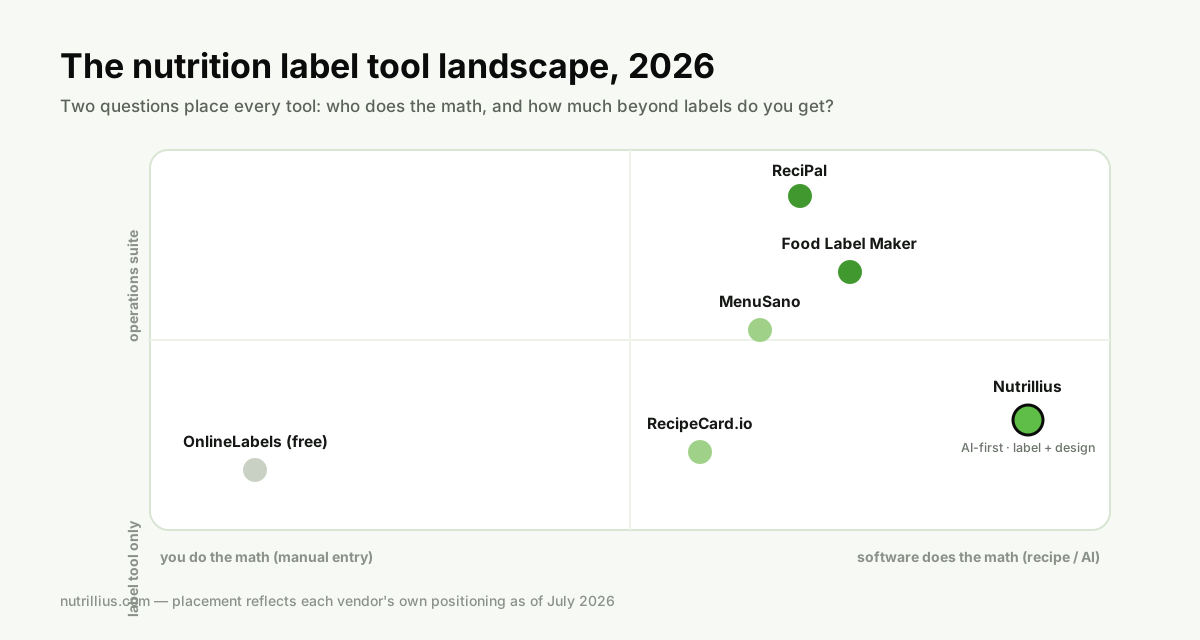
At-a-glance comparison
Pricing is “as of July 2026” from each vendor’s public pages — always confirm current pricing on their site.
| Tool | How labels are built | Free option | Paid from | Stand-out strength |
|---|---|---|---|---|
| Nutrillius | Recipe-based + AI (type/paste/photo a recipe) | Unlimited building & preview, no account | $39 one-time / $69/mo unlimited | AI-first workflow, compliance auto-updates, design quality |
| ReciPal | Recipe-based (USDA database) | 1 recipe, watermarked | ~$29/label or ~$59/mo (50 recipes/mo, 1 user) | 10+ year track record; costing, inventory & lot tracking; CFIA labels |
| Food Label Maker | Recipe-based | Trial-style access | Subscription (tiered) | Breadth of formats & compliance checks; CFIA support |
| MenuSano | Recipe-based | Basic free generator | Subscription (tiered) | Foodservice/restaurant focus; US + Canadian formats |
| RecipeCard.io | Recipe-based | A few labels/month | Subscription | Simple and quick for small needs |
| OnlineLabels (free) | Manual entry — you type final values | Completely free | — | Fast mock-ups; prints to their label stock |
How we evaluated (and why you can trust a vendor’s comparison)
We’re a vendor on this list, so we held ourselves to three rules. One:every competitor claim comes from that vendor’s own public pages (pricing, features), dated “as of July 2026”, so you can verify each one in a minute. Two:each tool gets its genuine strengths stated plainly — including the places a competitor beats us (ReciPal’s operations suite, Food Label Maker’s format breadth). Three:we compared on the five things buyers actually ask about: who does the math, compliance features (rounding, allergens, ingredient statements), export quality, pricing model, and free-tier honesty. Where we couldn’t verify a detail, we say “check their site” instead of guessing.
1. Nutrillius — best for speed, AI and design
Nutrillius(yes, ours) is built around one idea: you shouldn’t need to learn labeling software to get a compliant label. Type or paste a recipe — or a product idea, or a photo — and the AI builds the ingredient list; the engine then applies the 21 CFR 101.9 rounding rules, computes %DV, writes the ingredient statement and allergen declaration, and renders vertical, tabular and linear formats live.
- Where it wins: the AI recipe import, a 7,700+ ingredient USDA library, measuring in cups/tbsp/scoops, no-login building, and pricing — free to build, $39 one-time per label or $69/mo unlimited.
- Where it doesn’t (yet): no Canadian/CFIA formats — if you sell into Canada, ReciPal is the right answer and we are not. Their operations suite also has years of real production floors behind it where ours is new. (Recipe costing, UPC/EAN barcodes, spec sheets and Supplement Facts shipped in July 2026; inventory with FIFO lot tracing, production runs, recall and a public API in September 2026.)
2. ReciPal — best for operations depth
ReciPal is the long-standing incumbent, in market for over a decade, and it has earned its reputation. Beyond FDA and CFIA (bilingual Canadian) labels it does recipe costing, inventory, purchase orders and lot tracking — closer to a lightweight ERP for small food manufacturers than a label tool.
- Where it wins: operational breadth (costing, inventory, traceability), Canadian formats, supplement facts, a long compliance track record.
- Trade-offs: as of this writing the ~$59/mo tier is 1 user and capped around 50 recipes/month (unlimited comes at ~$129/mo), the free label is watermarked, and the interface shows its age. Full head-to-head: Nutrillius vs ReciPal.
3. Food Label Maker — best format breadth
Food Label Maker covers an unusually wide set of label formats and compliance aids — multiple FDA layouts with built-in rounding and serving-size checks, plus Canadian support and claim guidance. A solid, compliance-serious choice, priced as a tiered subscription. Full head-to-head: Nutrillius vs Food Label Maker.
4. MenuSano — best for foodservice
MenuSano approaches labeling from the restaurant and foodservice side — menu nutrition analysis as much as packaged-goods labels, with US and Canadian output. If you run a commercial kitchen or restaurant group publishing nutrition info, it’s built for your workflow; pure CPG makers may find generators aimed at packaged goods more direct. Full head-to-head: Nutrillius vs MenuSano.
5. RecipeCard.io — best lightweight option
RecipeCard.io offers a straightforward recipe-to-label flow with a small free monthly allowance — a reasonable fit for very small or occasional needs, with less depth in compliance tooling than the options above.
6. Free manual tools (OnlineLabels & similar)
Completely free, completely manual: you type in final nutrient values and they format a panel. That’s genuinely useful for a packaging mock-up. The catch: you are doing the recipe math, the unit conversions and the FDA rounding — which is exactly where DIY labels go wrong. If you use one for a real product, triple-check against the rounding tables.
How to choose
| If you are… | Pick |
|---|---|
| A small brand that wants a compliant label today with zero learning curve | Nutrillius |
| A manufacturer needing costing, inventory, lot tracking or CFIA labels | ReciPal (or Food Label Maker for formats) |
| A restaurant/foodservice operation | MenuSano |
| Making a quick mock-up with numbers you already have | A free manual tool |
nutrillius · free to build
Try the Nutrillius generator — free, no account
Paste a recipe or type a product idea and watch a print-ready, FDA 21 CFR 101.9-format Nutrition Facts label build itself — rounding, %DV, allergens and ingredient statement included. Pay only when you download.
Create Label Now →No account needed · PNG · PDF · SVG from $39
Frequently asked questions
What is the best free nutrition label generator?
For a quick manual-entry mock-up, OnlineLabels’ free tool works. For a real recipe-calculated label, free tiers are limited: ReciPal gives one watermarked recipe, RecipeCard.io a few labels per month, and Nutrillius lets you build and preview unlimited labels free — you pay only to download the print files.
Are labels from these generators actually FDA compliant?
The reputable recipe-based tools (all six here) generate the 21 CFR 101.9 format with FDA rounding. Compliance of the final label still depends on your inputs — accurate ingredient data, a correct serving size, and truthful allergen declarations. No generator can verify what you typed in; always review before print.
Which nutrition label generator is best for Canadian labels?
ReciPal and Food Label Maker both support CFIA (Canadian) bilingual formats today. Nutrillius currently focuses on US FDA labels, with Canadian formats on the roadmap — if you need CFIA labels right now, those two are your shortlist.
Do any of these replace lab testing?
They implement the FDA-accepted database calculation method, which is sufficient for most packaged foods made from known ingredients. For fried, fermented or smoked products — or nutrient claims you must defend — pair software with lab analysis. Details in our cost guide.
Keep reading
Nutrillius vs ReciPal — the full head-to-head
Pricing, features and honest trade-offs against the 10-year incumbent.
Read →How much does a nutrition label cost?
Lab vs consultant vs software — the real 2026 price ranges.
Read →How to make a nutrition facts label
The full eight-step FDA process every one of these tools is automating.
Read →Nutrition labels for cottage food
Selling from a home kitchen? You may not need a Nutrition Facts panel at all.
Read →